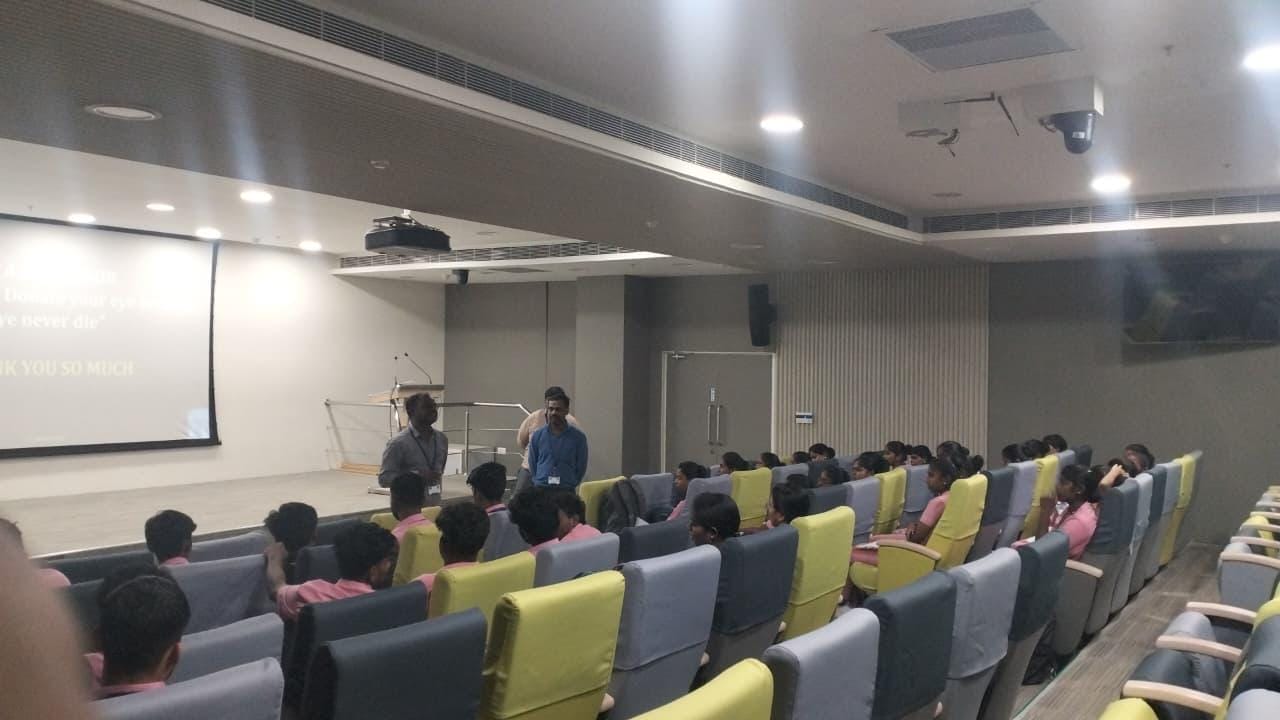
The B.Sc. Nursing III and IV year students of Meenakshi College of Nursing undertook an educational visit to the CU Shah Eye Bank at Sankara Nethralaya, Chennai, on 15 and 17 December 2025, as part of their clinical learning and community health exposure. Sankara Nethralaya, a renowned super-speciality eye care institution, houses the CU Shah Eye Bank, which plays a vital role in the collection, preservation, and distribution of donor corneas for restoring vision in individuals affected by corneal blindness.
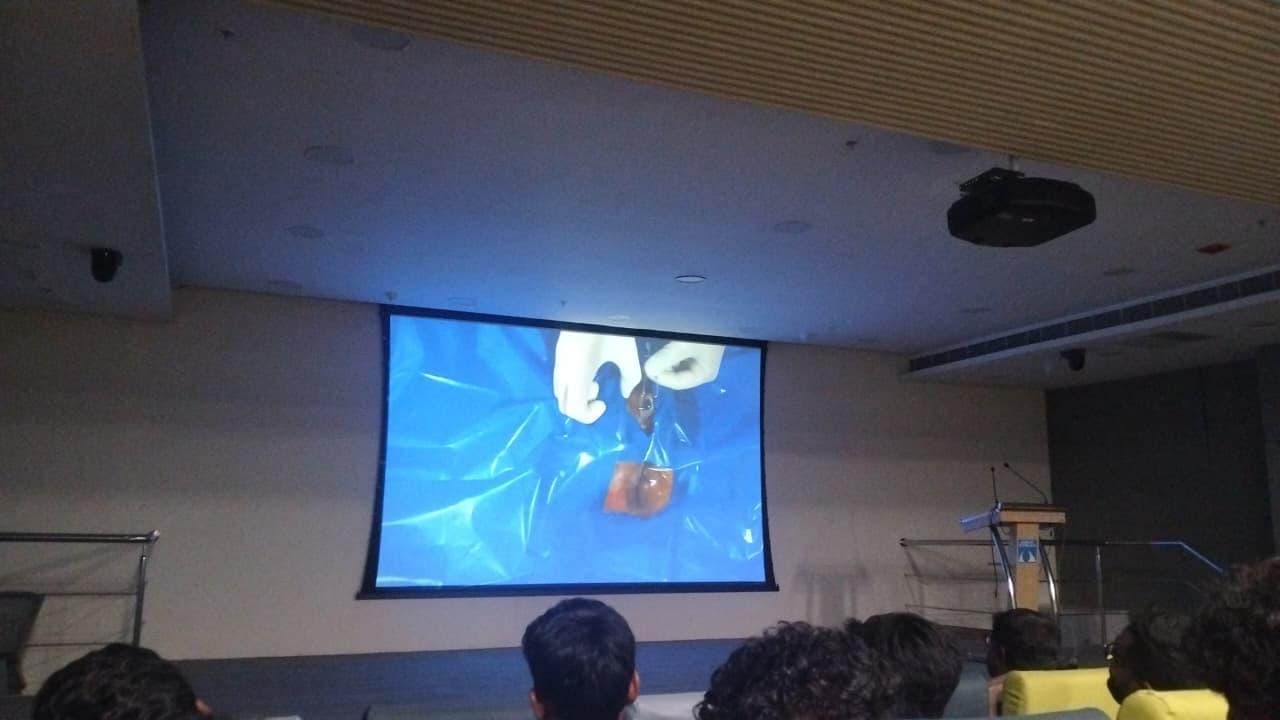
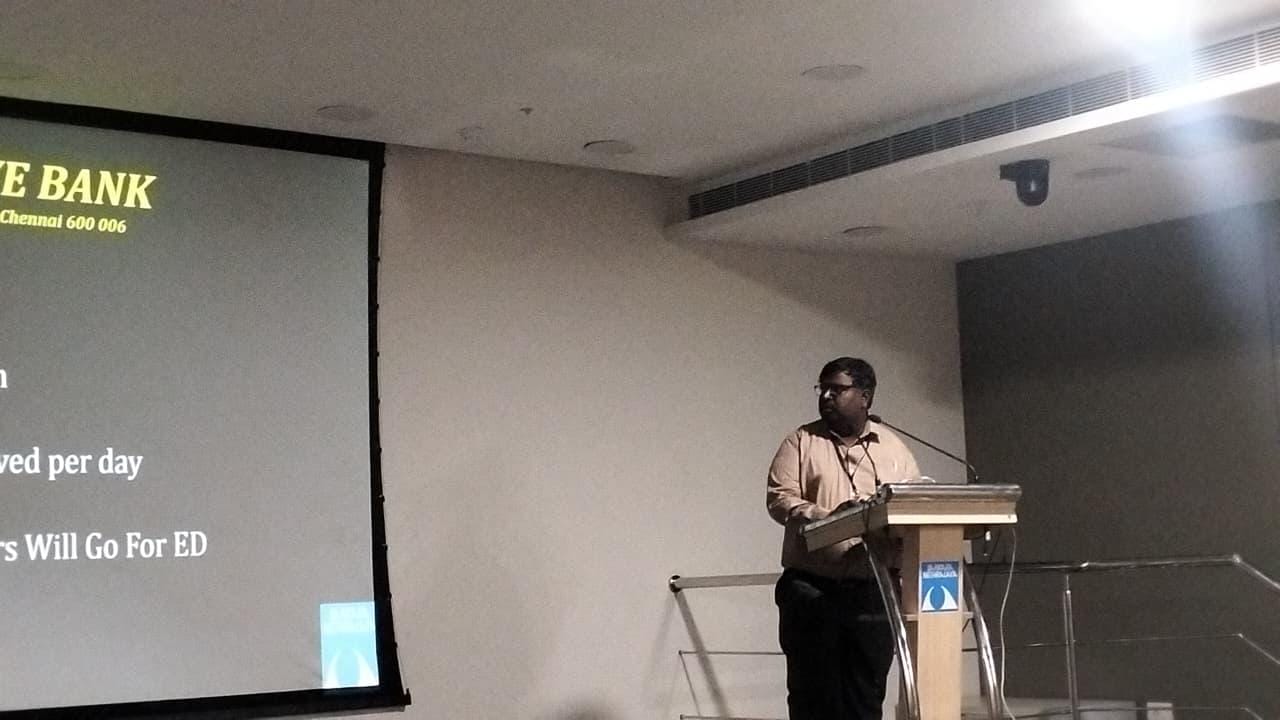
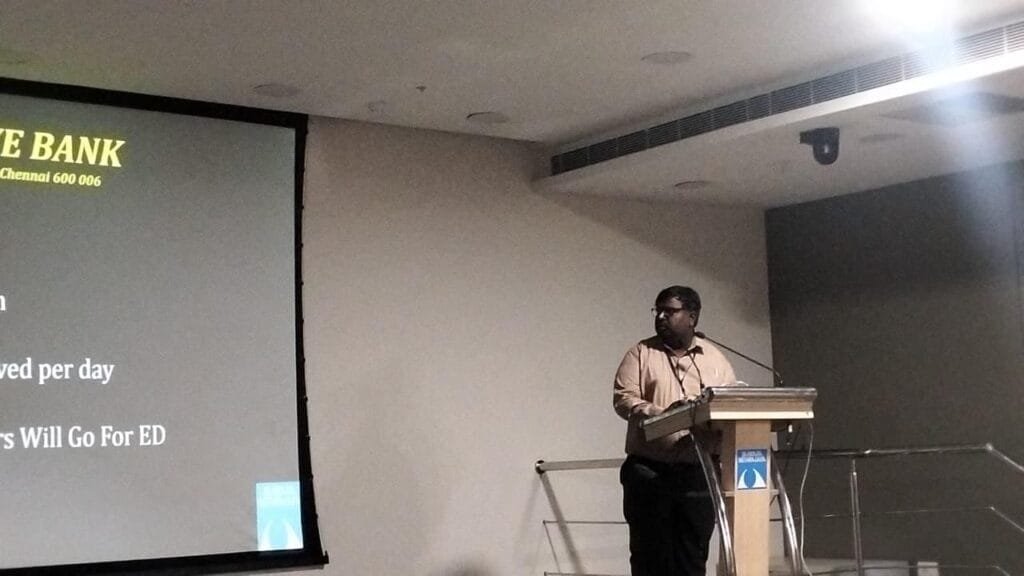
During the visit, the students were oriented to the concept and significance of eye donation by Mr. Lakshmi Narayanan, Social Worker, Sankara Nethralaya, who explained how a single donor can help more than one individual regain sight. Mr. Suresh, Social Worker and Grief Counsellor, provided a detailed explanation of the eye donation process, including family consent, timely retrieval after death, donor tissue screening, preservation, evaluation, and allocation for transplantation. He emphasized that age is not a major barrier for eye donation and highlighted the importance of timely awareness and public participation. Common myths associated with eye donation were clarified, and students learned that corneas unsuitable for transplantation are respectfully utilized for research purposes with the consent of donor families.
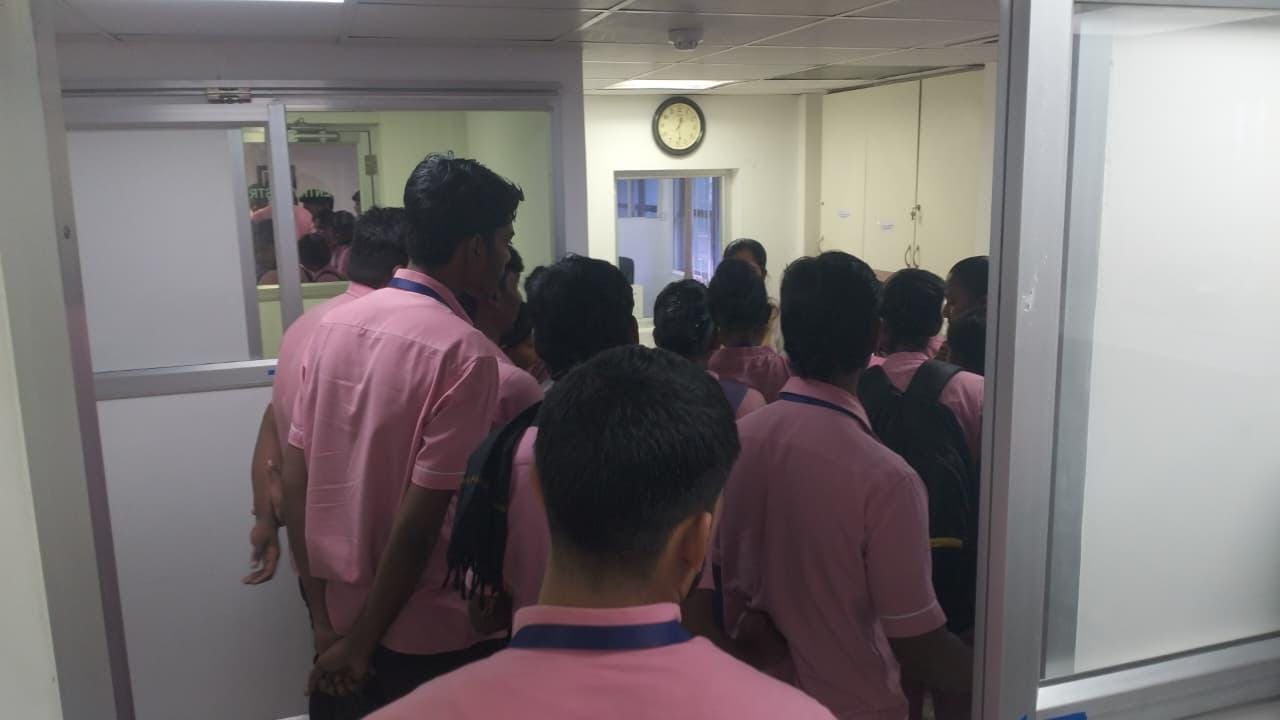
The students were given the opportunity to observe the specialized eye bank laboratories, where donated corneas are carefully examined and preserved under strict sterile conditions using advanced instruments to ensure quality and safety. They gained first hand exposure to tissue processing techniques, evaluation methods, and preservation protocols that support successful corneal transplantation. The role of continuous awareness programs, counselling services, and round-the-clock eye donation helplines in promoting eye donation was also highlighted.
Overall, the visit proved to be a highly informative and enriching learning experience, deepening students’ understanding of eye donation, ethical practices, and the humanitarian impact of organ donation. A total of 94 students and 4 faculty members benefited from this exposure, which reinforced the importance of compassion, community awareness, and professional responsibility in healthcare.