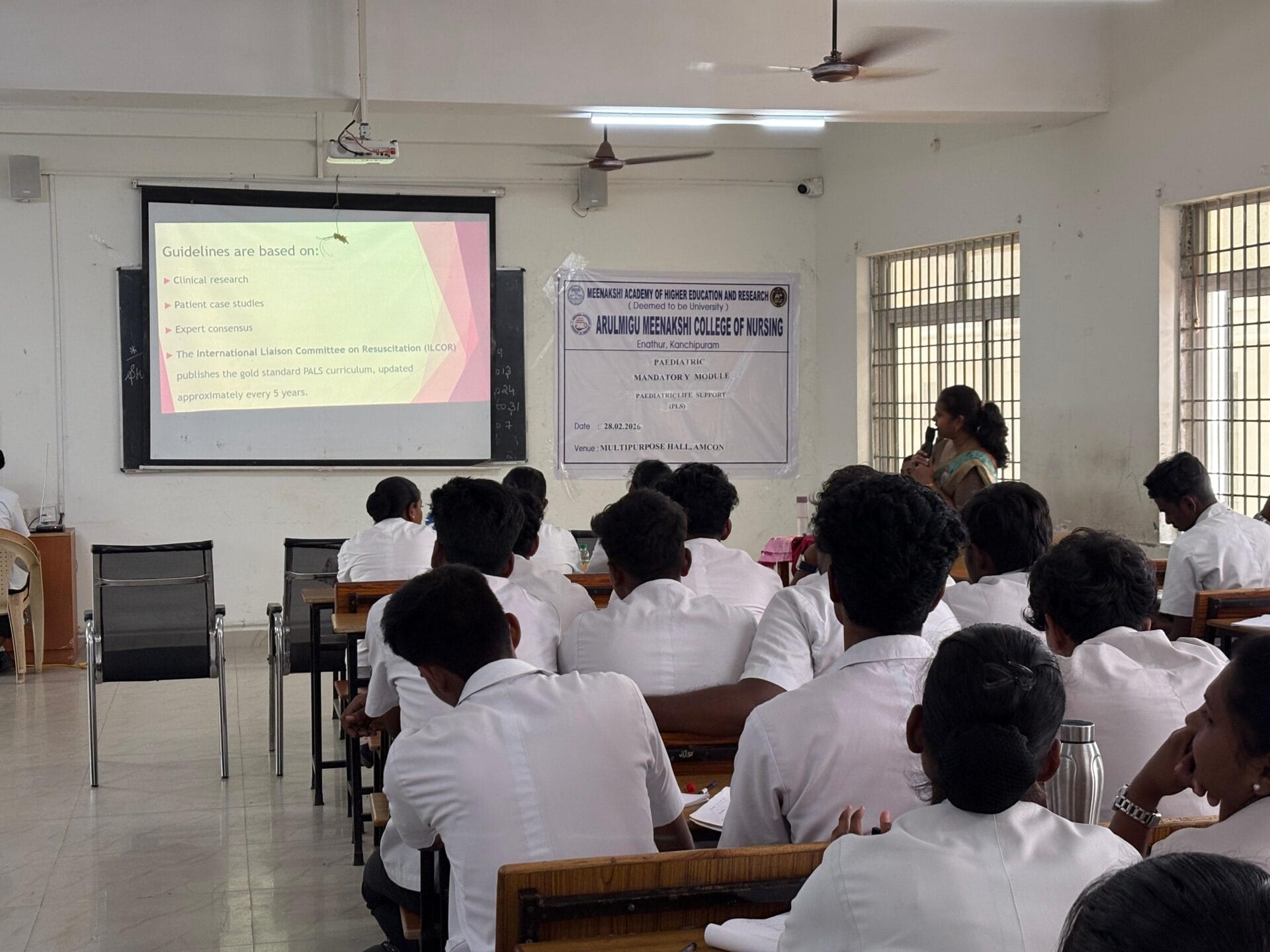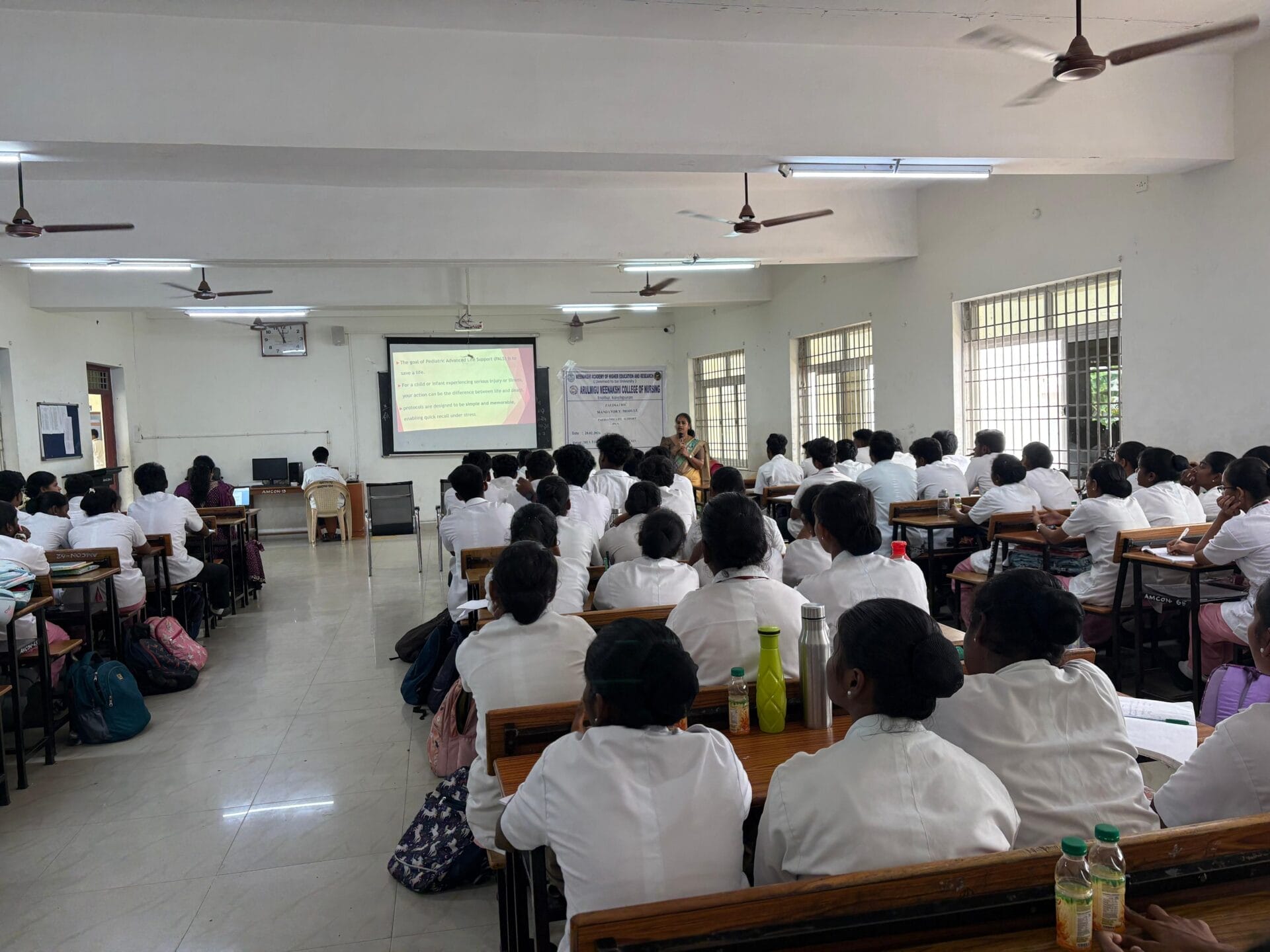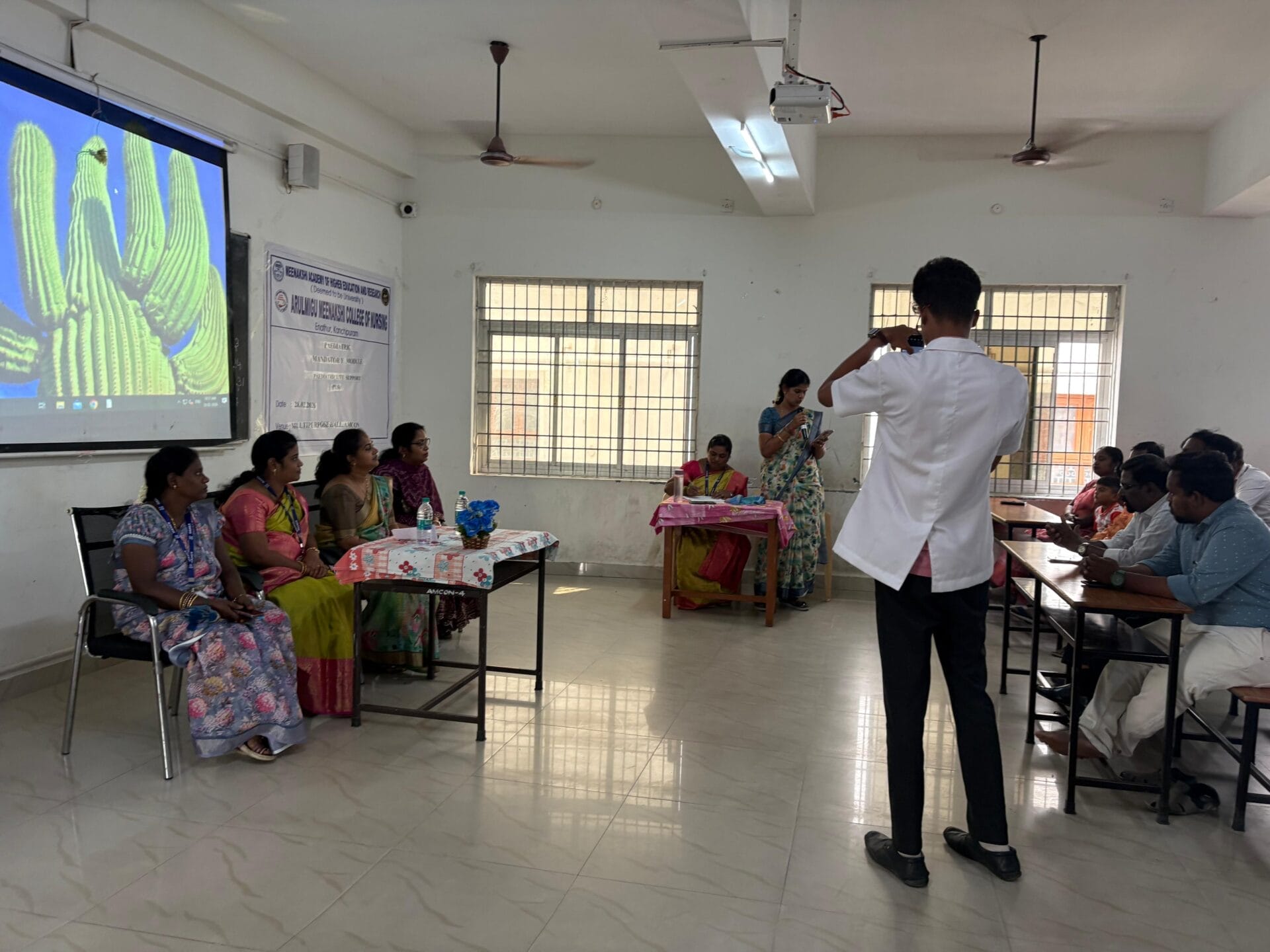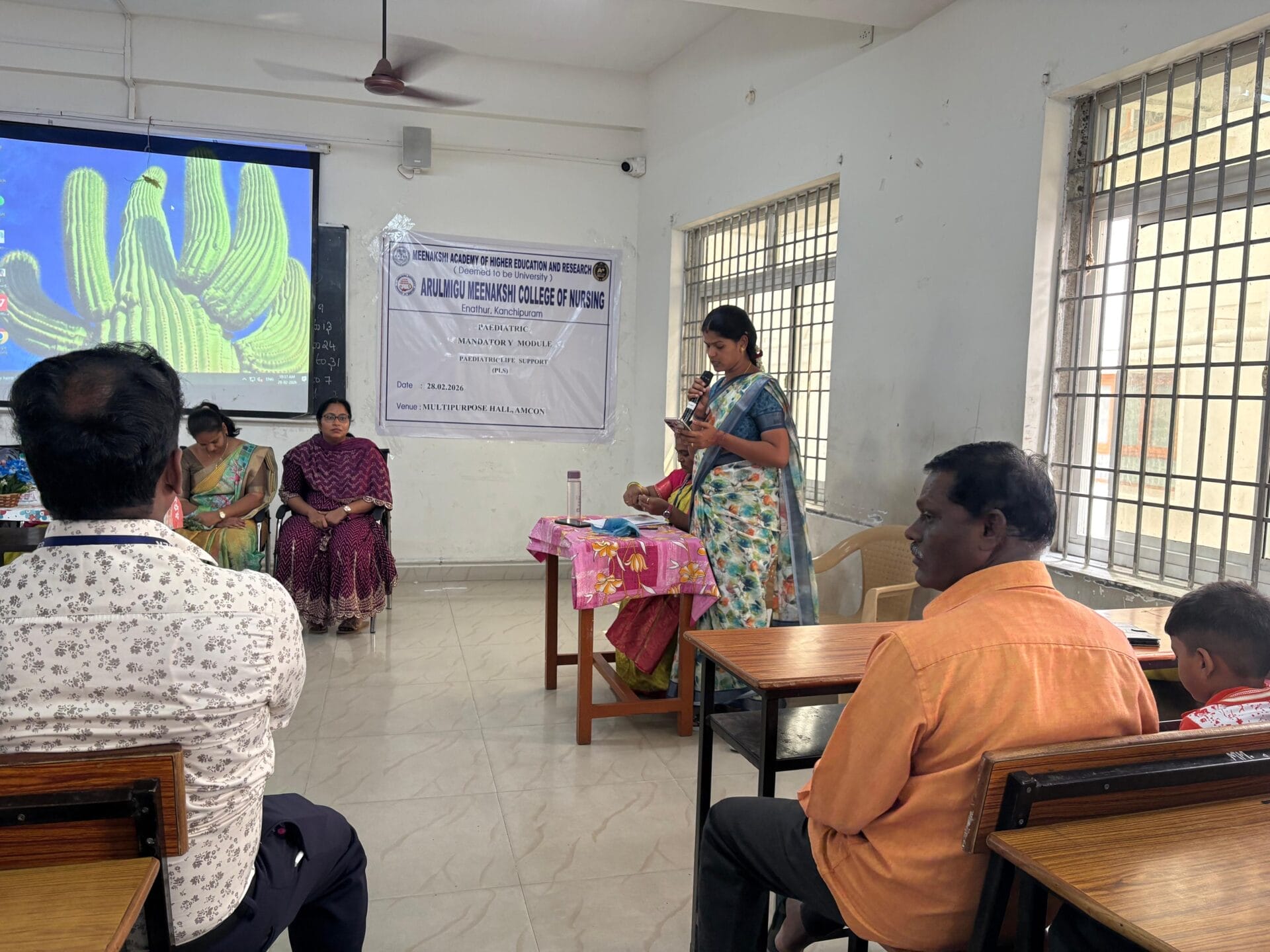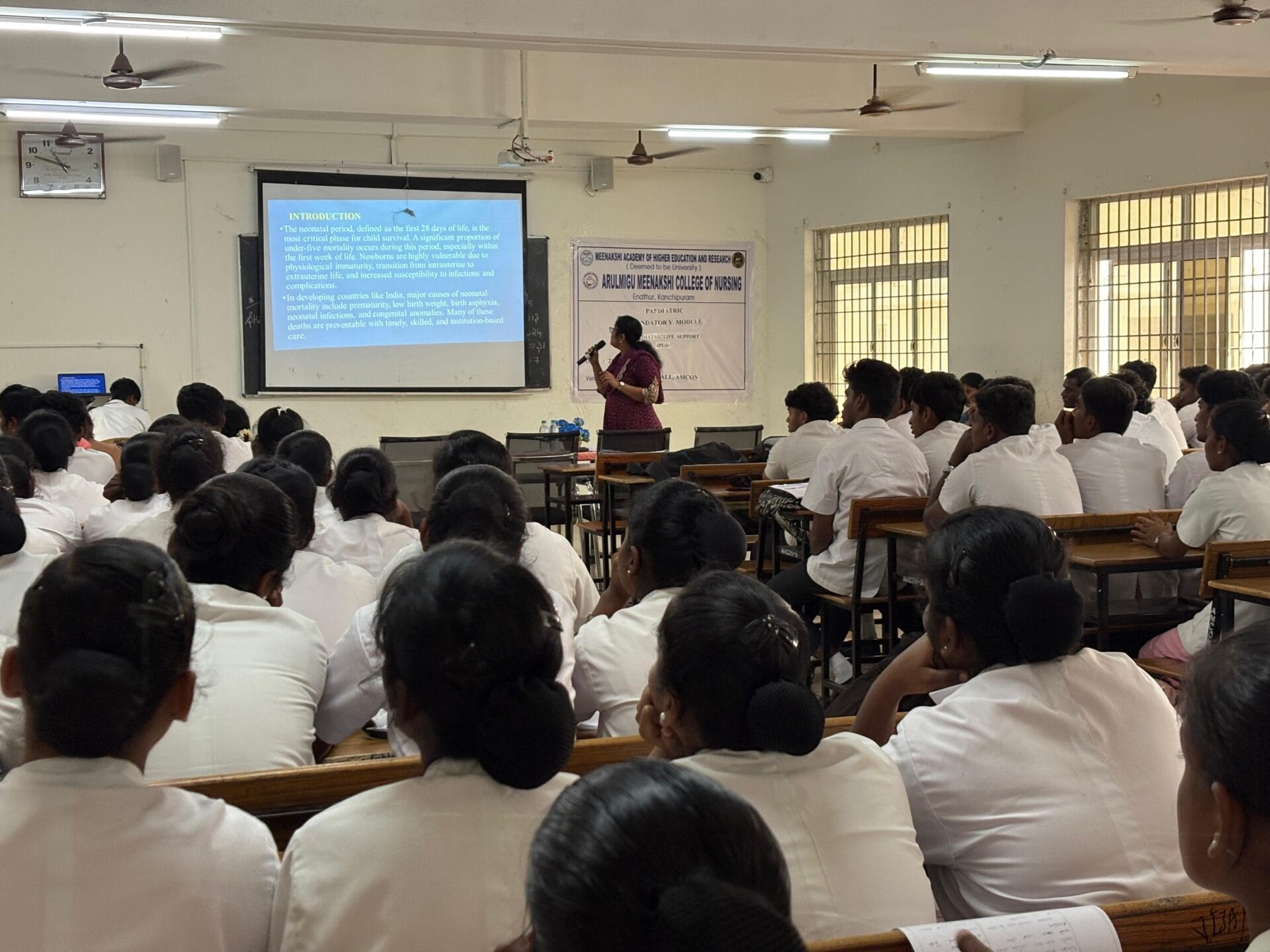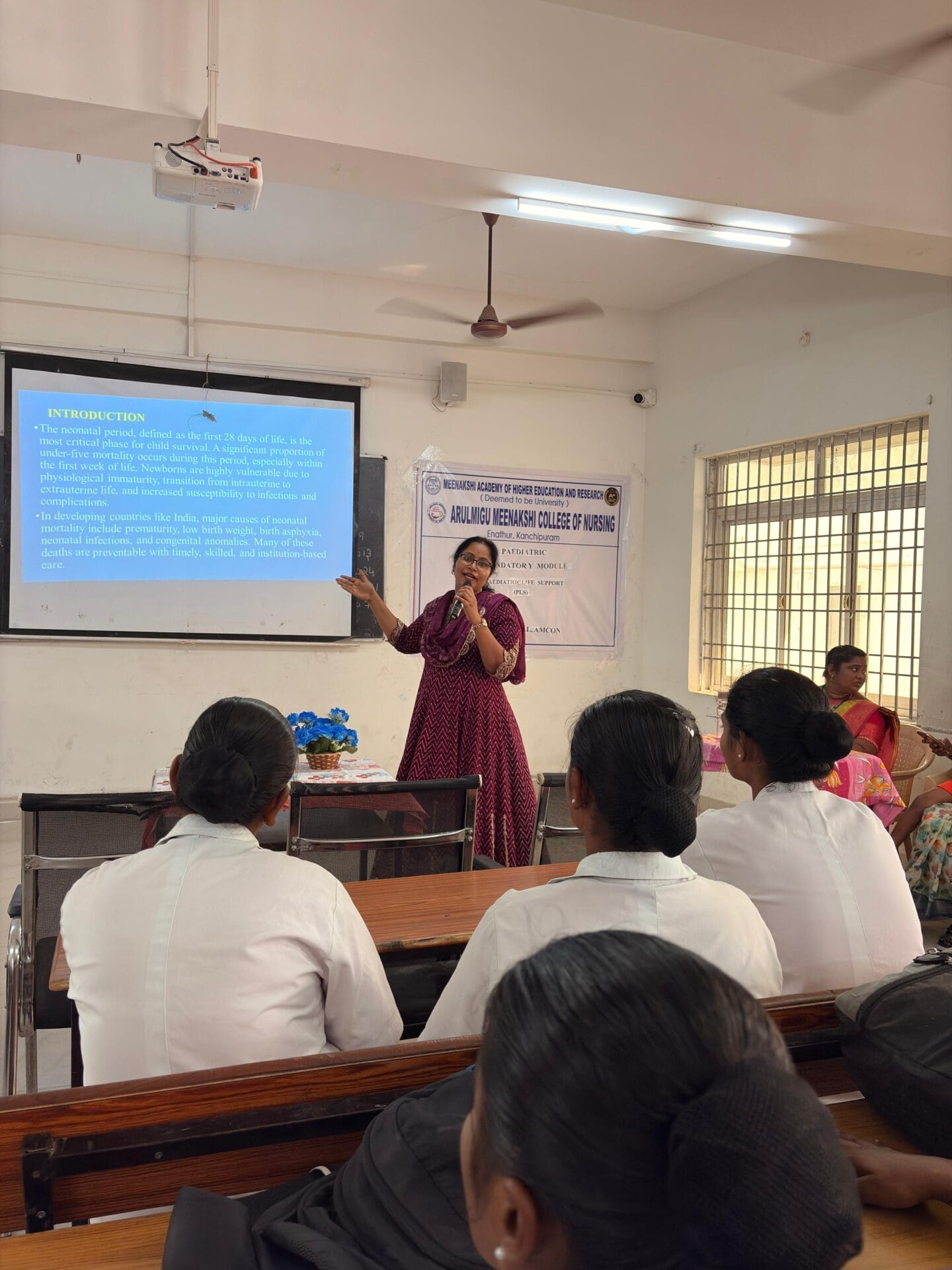
In a significant academic initiative aimed at enhancing neonatal and pediatric nursing competencies, the Department of Pediatric Nursing at Arulmigu Meenakshi College of Nursing (AMCON) conducted a comprehensive Paediatric Mandatory Module for V semester students from 23rd to 28th February 2026. The six-day programme on the theme “From Evidence to Excellence: Nurturing Lifesavers for Tomorrow” Academic Year: 2025–2026, was strategically designed to bridge the gap between theoretical knowledge and clinical practice, equipping students with essential skills required for quality pediatric care.
The module focused on four core domains—Essential Newborn Care (ENBC), Facility-Based Newborn Care (FBNBC), Integrated Management of Neonatal and Childhood Illness (IMNCI), and Pediatric Life Support (PLS)—ensuring a well-rounded learning experience.
The programme commenced with an inaugural session held at the Multipurpose Hall, beginning with the Tamizh Thai Vazhthu, followed by a welcome address by Ms. Devi, Assistant Professor. The keynote address was delivered by Dr. S. Victor Devasirvadam, Principal, AMCON, who highlighted the importance of evidence-based practice and encouraged students to utilize the module as a foundation for specialization in pediatric nursing. The programme was coordinated by Mrs. S. Uma Associate Professor.
Each day of the module was structured to deliver focused and outcome-oriented learning. Sessions on Essential Newborn Care, led by Ms. Sheena Prasad, Nursing Superintendent, Rainbow Children Hospital, Chennai, emphasized critical aspects such as thermoregulation, Kangaroo Mother Care, breastfeeding, neonatal resuscitation, and infection prevention. A dedicated hands-on skill station enabled students to practice newborn assessment, identify danger signs, and demonstrate breastfeeding techniques, strengthening their clinical competence.
The IMNCI session, conducted by Mrs. S.D. Sharly Brindha Priyadharshini, guided students through systematic assessment and management of neonatal and childhood illnesses, with an emphasis on family-centered care. This was followed by an intensive Pediatric Life Support session focusing on emergency recognition, cardiopulmonary resuscitation (CPR), medication management, and post-resuscitation care.
The final day featured CPR demonstrations and return demonstrations, allowing students to master essential life-saving psychomotor skills and improve their readiness for real-time clinical scenarios.
The module resulted in measurable improvements in clinical confidence, patient safety practices, and reduction of potential errors through repeated hands-on training. It also stimulated interest in pediatric specialization and effectively integrated theoretical concepts with clinical application.
The programme concluded with a vote of thanks, acknowledging the contributions of the resource persons, faculty, and students, followed by the National Anthem.
This field engagement offered students valuable hands-on clinical exposure and the opportunity to refine essential pediatric care skills in simulated and supervised settings. It significantly enhanced their practical knowledge, critical thinking, and preparedness for handling neonatal and pediatric cases in clinical practice.